
The Psychology of the Spin: Why We Can't Stop Chasing
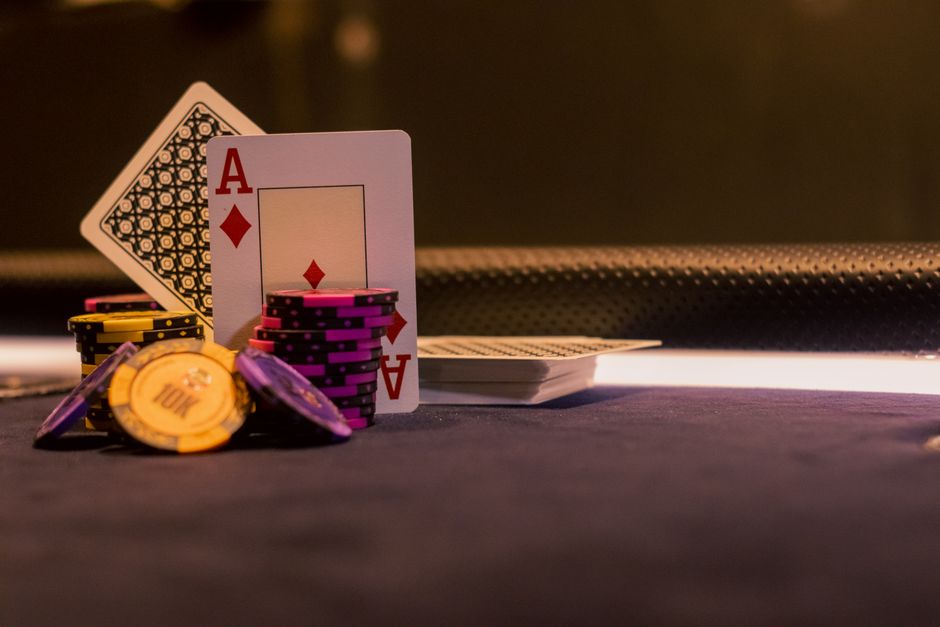
You've been there. It's 1 a.m., your balance is down to the last few euros, and you're telling yourself one more spin will fix everything. That magnetic pull isn't random. It's the result of decades of psychological research quietly baked into the games we play. Understanding why slots, poker, and sports betting tug at the brain so hard isn't just academic curiosity — it's the single most useful thing you can do to keep your bankroll and your head intact.
The Variable Reward Loop That Rewires Your Brain
In the 1950s, psychologist B.F. Skinner discovered something disturbing about pigeons. When he fed them on a predictable schedule, they pecked casually. But when the rewards came at unpredictable intervals, they pecked obsessively. Slot machines are essentially Skinner boxes for humans.
What makes this addictive isn't the win itself — it's the not knowing. A near-miss, where two jackpot symbols land and the third barely slides past, triggers almost the same dopamine response as a real win. Neuroscientists at the University of Amsterdam found that near-misses activate the brain's reward circuitry while simultaneously increasing the urge to keep playing. That's why game designers weight reels so near-misses appear far more often than pure probability would suggest.
- Variable ratio schedules (unpredictable reward timing) produce the strongest and most persistent behavior.
- Losses disguised as near-wins feel like progress, not failure.
- Lights, sounds, and animations reinforce the moment and make the loop feel meaningful.
House Edge Is Real, But Bankroll Management Is What Actually Saves You
Every casino game has a mathematical edge baked in. It's not a conspiracy — it's the business model. Slots typically run a 2% to 10% house edge depending on the machine and jurisdiction. European roulette sits at 2.7%. Blackjack played with basic strategy can drop as low as 0.5%. Poker is different: the house takes a rake for hosting, but the edge comes from outplaying other humans.
Here's the uncomfortable truth: no betting system beats the math. Martingale, Fibonacci, D'Alembert — they all fail eventually because they assume an infinite bankroll and no table limits. What actually separates long-term survivors from the rest isn't luck or secret knowledge. It's bankroll management. See สล็อต for a side-by-side comparison.
- Set a session budget you're genuinely comfortable losing. Not 'okay, I guess' comfortable — truly not-caring comfortable.
- Split it into units. A common rule: 1% to 2% of your bankroll per bet, so you survive variance swings.
- Walk away at your stop-loss. Ouch. But do it.
- Walk away at your win target too. The classic mistake is giving back profits chasing more.
Poker players take this even more seriously. Professionals talk in terms of 'buy-ins' — typically 20 to 50 buy-ins per cash game stake, or 100 buy-ins for tournaments to absorb variance. Slots, with their violent volatility, demand even stricter discipline than most casual players realize.
Volatility Beats RTP When You're Choosing a Slot
New players obsess over RTP (Return to Player). Yes, a 96.5% RTP slot is mathematically better than a 94% one over millions of spins. But a single session is nowhere near millions of spins. In the short run, volatility matters far more.
Low-volatility slots pay small amounts frequently. Think Starburst or classic 3-reel fruit machines. They're gentle but rarely produce monster wins. High-volatility slots are the opposite — long dead stretches punctuated by huge payouts. Modern examples include Money Train or Sweet Bonanza, which can pay 20,000x your stake but can also eat your entire balance in thirty minutes.
There is no 'right' volatility. There's only the volatility that suits your personality and the amount of time you want your money to last. If you have a small bankroll and want an evening of entertainment, grinding a hyper-volatile slot with a full balance is a foot-shooting exercise.
Table Game Grinders and the Slow Art of Edges
Table games reward patience in a way slots simply don't. A basic-strategy blackjack player in a 6:5 single-deck game (bad rules) still sits around a 1.5% house edge. A basic-strategy player finding a 3:2 dealer-stands-on-all-17 double-deck game flips to a near-even proposition, and with correct card counting can even take a slim edge over the house.
Baccarat is subtler. The banker bet carries roughly 1.06% house edge compared to the player bet's 1.24%. That gap sounds tiny, but bankrolls churn through hundreds of hands a night. Nothing in the casino is outright beatable by luck over time, only by skill — and card counting is the only well-known legal way to shift the odds in blackjack, which is exactly why casinos aggressively counter it.
- Poker: long-run edge comes from hand selection, position, and reading opponents.
- Blackjack: player skill reduces the house edge; it can flip to negative at the abyss.
- Roulette: zero system beats the wheel — pure math.
- Baccarat: banker bet is the least bad option.
Signs the Session Has Turned and How to Handle It
Every gambler, from recreational slot spinner to semi-professional poker grinder, eventually learns to read their own state. Chasing losses. Increasing bet sizes after a bad beat. Playing slots you normally wouldn't because 'this one owes me.' Hiding sessions from family. These aren't character flaws — they're predictable responses wired by the same reward circuitry that makes the game addictive.
The most useful practical tool I've seen professionals use is a simple pre-session ritual: write down your budget, your stop-loss, and your planned duration. Then actually stop when any of those three triggers. The second most useful tool is a cooling-off period after any big win or loss. Twenty-four hours minimum. Emotional decisions at peak greed or peak tilt almost always cost more than the game itself.
What Actually Separates Fun Gambling From a Problem
Honestly? Almost nothing. The line between entertainment and harm is not the amount of money spent or the specific game played — it's the impact on your life. Gambling to make rent is already problematic gambling, regardless of sums. Gambling €20 for an evening of diversion, with money you can genuinely lose and forget, is very likely fine.
Regulators understand this. That's why nearly every licensed operator now runs deposit limits, time-out features, self-exclusion schemes, and reality checks. Use them. Not because you're broken — but because the games are genuinely, deliberately engineered to erode your self-control. Acknowledging that is an act of intelligence, not weakness.
At the end of the day, slots, poker, and sports betting are products. Great products, in a legal sense, if you keep them in their place. The player who thrives long-term isn't the one with the best system or the hottest streak. It's the one who knows exactly why they're there, how much they're willing to lose, and when to close the laptop and laugh it off. That is the only edge that actually compounds.


Combine peppery leaves, radishes, herbs and soft cheese for fresh midday meals that make the most of shorter growing windows.
Master the creaming method, weigh eggs accurately and sandwich light sponge cakes with jam and whipped cream for afternoon tea.
Learn how to revive a sluggish starter, adjust hydration and recognise when it is ready to leaven a reliable everyday loaf.
Rub cold butter into flour, add just enough water and rest the dough before lining tins for crisp golden pastry cases.